 |
|||||||||
|
|||||||||
|
Beverage
Galore |
|
||||||||
| |
|||||||||
| Straight?
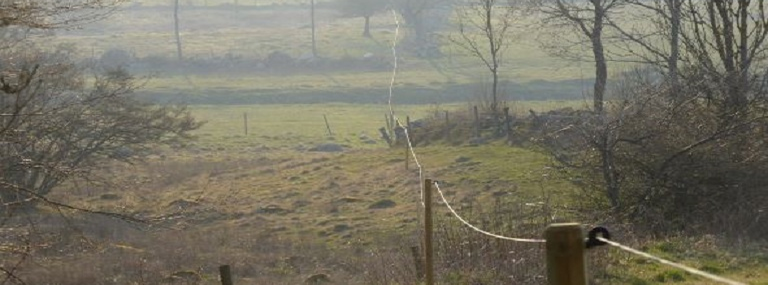
Not necessarily... In theory, your Beverage antenna should be straight and at the same height. That's theory. In real life, antenna wires doesn't care that much about theory.They just want to work. For months I did a test with two antennas in the same direction, separated by some meters. One straight as an arrow (well, almost), 400 meters. 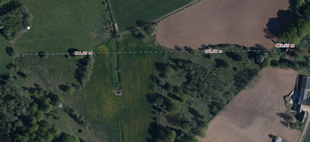 The other zigzagging along a barbed wire fence. 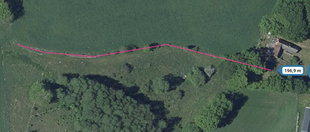 The best Beverage of these two, in the long run, turned out to be this zigzagg'er -- which in theory should be the worst. So Thomas Nilsson's axiom stands: Look around, and make the most of it. |
 |
Antenna
tools The Internet is full of good advice, and lots of bad. Here are some of the better ones. W8JI.com -- all you need to know Tom Rauch's rules for receiving antennas:  Lay feed
lines directly on earth or bury feed lines in the soil so earth losses
reduce shield current and limit feed line common
mode impedance. If noise
levels
are high or antenna sensitivity is very low, isolate the feed line from
the antenna as it approaches the antenna by using choke baluns Ground
the feed line a few dozen feet away from the antenna Avoid
autotransformers. Instead use isolated primary and secondary
isolated winding transformers Use
an independent ground on the antenna. Never connect an antenna
signal ground to the coaxial cable shield! Terminated
loops (K9AY, Flag, Pennant, Ewe) -- Great care must be taken
in decoupling the feed line from the antenna. The
wonderful Beverage -- there isn't any other receiving antenna
that is as simple, as easy to construct and maintain, and as foolproof
as a Beverage Lay feed
lines directly on earth or bury feed lines in the soil so earth losses
reduce shield current and limit feed line common
mode impedance. If noise
levels
are high or antenna sensitivity is very low, isolate the feed line from
the antenna as it approaches the antenna by using choke baluns Ground
the feed line a few dozen feet away from the antenna Avoid
autotransformers. Instead use isolated primary and secondary
isolated winding transformers Use
an independent ground on the antenna. Never connect an antenna
signal ground to the coaxial cable shield! Terminated
loops (K9AY, Flag, Pennant, Ewe) -- Great care must be taken
in decoupling the feed line from the antenna. The
wonderful Beverage -- there isn't any other receiving antenna
that is as simple, as easy to construct and maintain, and as foolproof
as a BeverageNoise, noise, noise
Serious ferrite core for RFI problems
-- "an HF ferrite choke will typically need 6-8 turns passing through
the centre hole. Regardless of the type of core, one pass through the
centre will never be effective at HF!"*More from "In Practice" by GM3SEK in RadCom Noisy power supplies -- a very common problem when using laptops. A high quality linear power supplies often fix most issues with noise ingress. Low Band DXing by John Devoldere (ON4UN, silent key). HCDX Antenna Special -- well, not the best, but my first attempt to give you some antenna ideas. Reference articles (PDF)
Azimuthal map for Flensma
How to wind a toriod
Common mode chokes for reducing noise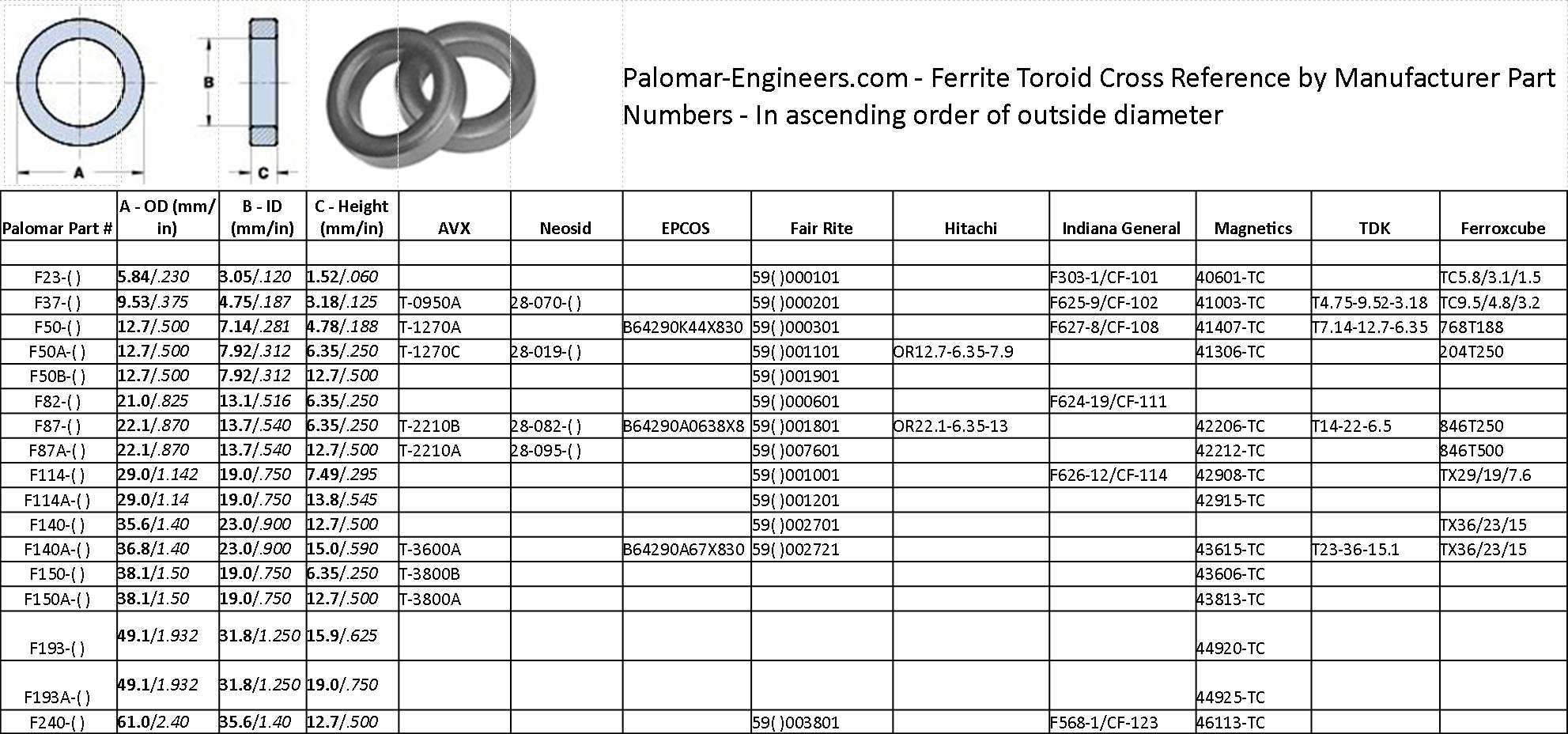 Ferrite Cross-Reference List
Ferrite
Cross-Reference List [3E25]
Amidon
ferrite data [PDF]
Epcos
N30 data [PDF]
Binocular transfomersTurns
on binocular cores
Ferrite Cross-Reference List
Ferrite
Cross-Reference List [3E25]
Amidon
ferrite data [PDF]
Epcos
N30 data [PDF]
Binocular transfomersTurns
on binocular coresFor lower loss, greater bandwidth, and no core saturation, use Amidon BN-73-202 (Fair-Rite 2873000202) ferrite binocular balun cores. RF Transformer Calculator This online RF transformer calculator calculates the turn ratio of an RF transformer More info Beverage antennas -- a practical guide (PDF) Continuity tester Smart antenna tricks Smart repair tricks |
|||||||
| |
|||||||||
 Skånska
landskap Skåneleden
Vargrevir
Degeberga
antikmarknad Stenshuvud
Naturreservat Skånska
landskap Skåneleden
Vargrevir
Degeberga
antikmarknad Stenshuvud
Naturreservat |
|||||||||